
How Group Art Therapy Supports Mental Health and Wellbeing
For many people, putting difficult feelings into words is genuinely hard, especially when those feelings are tied to disability, trauma, or ongoing mental health challenges. Art therapy for mental health offers a different way in, using the creative process to explore and express what can be hard to say out loud.
This guide looks at what art therapy actually is, why doing it in a group setting can add real value, and what the evidence currently says about its benefits. It is written as general information rather than clinical advice, so anything specific to your own situation is still worth discussing with a qualified professional.
Understanding Art Therapy for Mental Health
Art therapy is a recognised therapeutic practice, distinct from a general art class, delivered by therapists who have completed postgraduate training in art or creative arts therapy. In Australia, registered practitioners are typically accredited through ANZACATA, the peak professional body for creative arts therapists.
Rather than focusing on the technical quality of the artwork, an art therapist guides the creative process itself, helping someone explore emotions, memories, or experiences that can be genuinely hard to put into words. This is what separates art therapy for mental health from a recreational art class: the focus is therapeutic, not aesthetic.
It is worth being clear that art therapy is not a stand-alone replacement for other mental health treatment where that is already in place. Most commonly, it works alongside existing supports such as a GP, psychologist, or psychiatrist, rather than instead of them.
Why Group Settings Matter: The Benefits of Group Art Programs
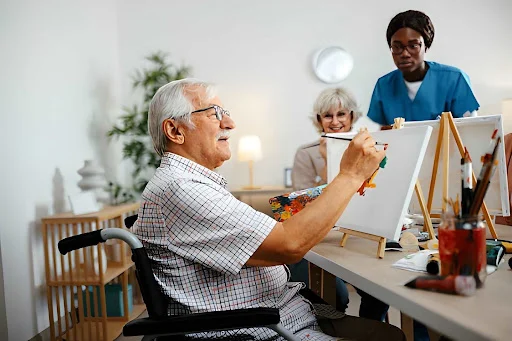
Group art programs offer more than a chance to be creative. They provide a supportive environment where participants can connect with others, express themselves, and build confidence through shared experiences.
- Reduces feelings of isolation by bringing together people who understand similar challenges.
- Creates a supportive and welcoming environment where participants can feel accepted without needing to explain their experiences.
- Encourages peer connection through shared activities, conversations, and mutual support.
- Supports emotional wellbeing by combining creative expression with meaningful social interaction.
- Builds confidence and a sense of belonging through regular participation in a positive group setting.
- Provides consistent support with scheduled sessions that are often easier to include in a weekly routine than individual appointments.
- Combines therapeutic and social benefits, helping participants strengthen both emotional resilience and community connections.
For many people, the combination of creativity and social connection makes group art programs especially valuable. Regular participation can improve emotional wellbeing, reduce isolation, and create lasting friendships while supporting personal growth.
Expressive Arts and Mental Health: What the Evidence Shows
Expressive arts and mental health research has grown considerably in recent years. Studies have linked art therapy to improved self-awareness, better emotional regulation, and reduced levels of distress and anxiety, particularly for people who find traditional talk-based therapy difficult to engage with.
An independent 2025 review into art and music therapy under the NDIS, led by health economist Dr Stephen Duckett, confirmed that these therapies can be effective and beneficial when delivered by appropriately qualified professionals. This has helped settle earlier uncertainty about the evidence base and given both participants and providers more clarity going forward.
It is worth being realistic about what the evidence shows: results vary between individuals, and art therapy tends to work best as one part of a broader support plan rather than a single fix for a complex situation.
Creativity and Wellbeing: More Than Just Making Art
Creativity and wellbeing are connected in ways that go beyond the finished piece of art. The process of creating, choosing colours, shaping materials, or simply making marks on a page, can be genuinely calming and grounding, offering a break from circular or distressing thoughts.
This does not mean someone needs any artistic skill or experience to benefit. Art therapy is not about producing something impressive; it is about what the process itself allows someone to notice, express, or work through. Many participants who assume they are “not creative” find this reassuring once they understand that the outcome was never really the point.
Art, Emotional Wellbeing, and Long-Term Community Connection
Art can support emotional wellbeing long after a creative session has finished. Regular participation in art programs provides an ongoing outlet for self-expression, helping people manage stress, process emotions, and build confidence in a positive and enjoyable way. Over time, these creative routines can contribute to greater emotional resilience and a stronger sense of purpose.
The benefits become even greater when art programs also encourage community participation. Taking part in regular group activities helps people build meaningful relationships, stay socially connected, and develop a sense of belonging within their local community. Rather than relying on one form of support, combining creative expression with social engagement creates a balanced approach that supports both emotional wellbeing and long-term personal growth. Consistent participation often delivers the greatest results, as the routine and connections built over time can have a lasting impact on overall quality of life.
Is Art Therapy Funded Under the NDIS?
Yes, art therapy remains a funded support under the NDIS, generally sitting within Capacity Building, Improved Daily Living. Following the 2025 independent review, funding now requires delivery by a therapist registered with a recognised professional association, such as ANZACATA for art therapy, and price limits were updated to bring them in line with other allied health therapy rates.
A general art or craft class is treated differently to a funded therapy session, so it is worth checking with your plan manager or support coordinator about what specifically applies to your plan and goals before assuming either option is automatically covered.
How Ability Support Plus Can Help
At Ability Support Plus, we support participants to access group activities, including creative and art-based programs, that genuinely suit their goals and wellbeing. While we are not registered art therapists ourselves, we can help connect you with qualified providers and support your participation along the way, whether that means transport, attending alongside you, or simply helping you find a program that feels like the right fit.
If you would like to explore group art programs or broader recreational support, get in touch with our team today.